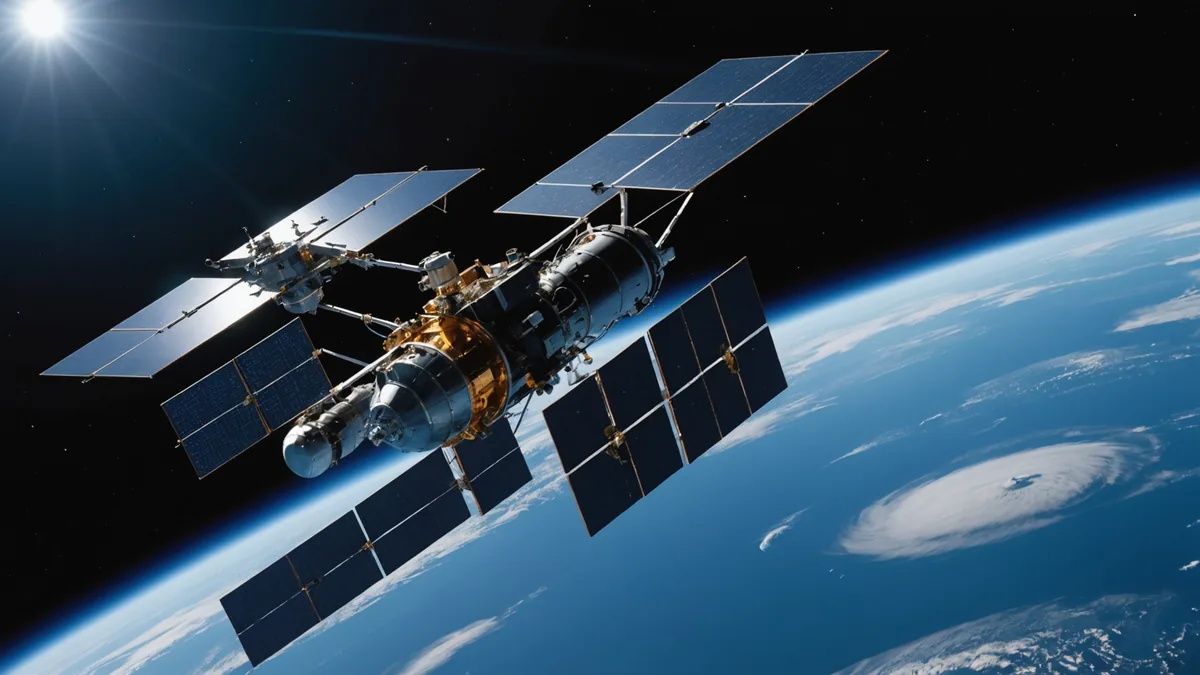
Propulsion is the decision that constrains every other trade on a CubeSat bus. Choose wrong and you discover it at orbit insertion, 550 km up, when the delta-v you thought you had does not exist. This guide walks through the four main technology options for 1U to 12U platforms, with the numbers that actually matter for mission planning.
Why Propulsion Choice Comes First
Many mission teams lock their bus configuration before selecting a propulsion system, then spend months in an interface-negotiation loop. In our experience, that sequencing adds 4-8 months to programme schedule and frequently forces a bus redesign. Propulsion dictates volume, mass budget, power draw, thermal margins, and safety classification for ground handling. Start there.
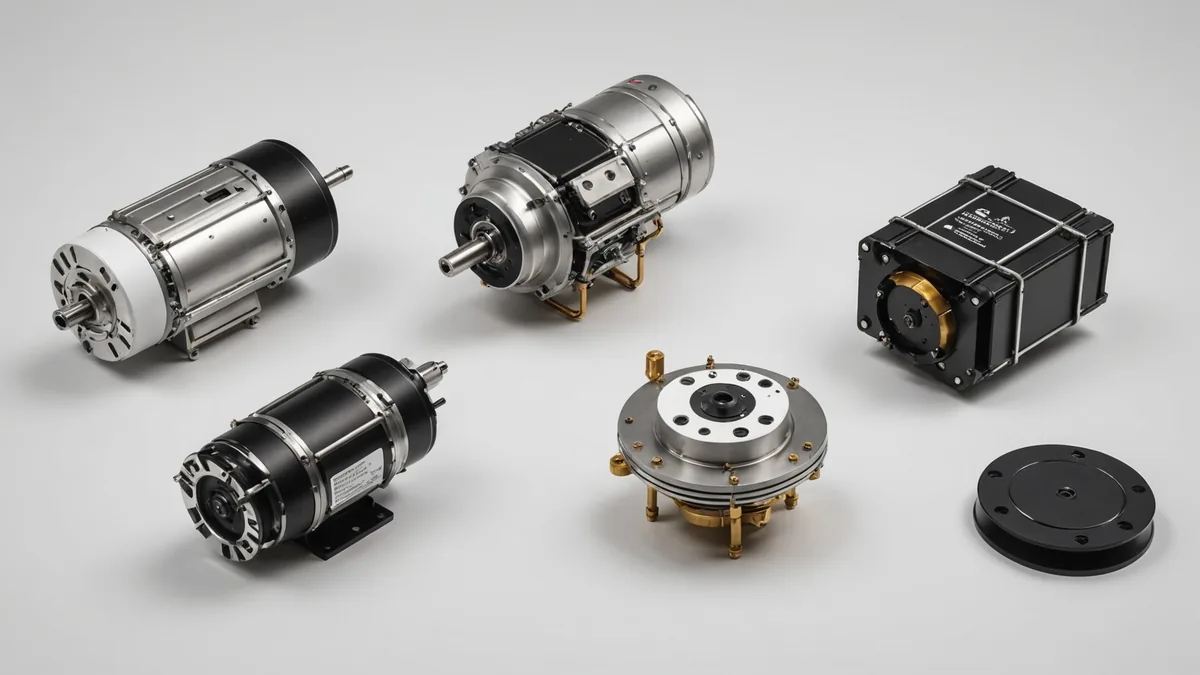
The four technology classes relevant to 1U-12U missions are: cold gas, warm gas, monopropellant (chemical), and electric (electrospray/Hall/RF-ion). Each occupies a distinct performance and complexity band.
Cold Gas Systems
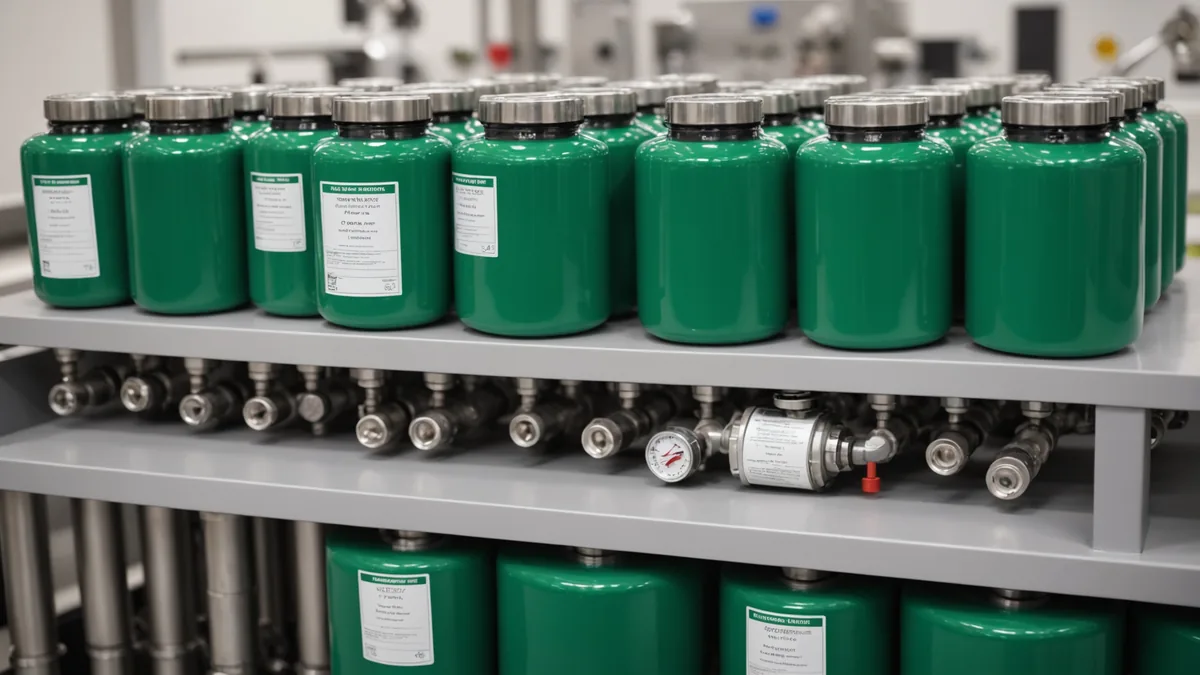
Cold gas is the simplest propulsion you can fly. Nitrogen or butane stored at 100-300 bar, a solenoid valve, a nozzle. Specific impulse (Isp): 50-75 seconds depending on propellant and nozzle geometry. Thrust: 5-100 mN. Total delta-v for a 3U platform with 30 g of nitrogen: roughly 5-15 m/s.
That is enough for attitude control augmentation and very limited orbital manoeuvring. It is not enough for orbit raise, plane change, or extended deorbit campaigns. But if your mission is technology demonstration in a fixed orbit with a 2-year design life, cold gas gets you there at minimal cost and with zero propellant hazard.
Key constraint: propellant mass fraction is poor. Pressurised storage at 200+ bar requires a tank that occupies significant volume for modest propellant mass. Above 12U the mass penalty becomes prohibitive relative to alternatives.
Warm Gas Systems
Warm gas systems heat propellant (typically butane, sulphur hexafluoride, or R-134a) through a resistive heater before expansion. Isp climbs to 100-130 seconds. Thrust: 20-200 mN. Delta-v for a 6U platform with 200 g propellant mass: 30-80 m/s.
Power draw for heating is 3-10W, which is compatible with CubeSat power budgets down to 3U. TRL for warm-gas butane systems is generally 6-8, with several units flying on commercial smallsat missions since 2019.
Practical note: butane condenses at temperatures below about -0.5 °C, which is well within the thermal range a CubeSat can see in eclipse. System design must include either propellant tank heaters or a thermal management approach that prevents condensation. This is solvable but adds complexity and power budget.
Monopropellant Chemical Systems
Here is where mission capability jumps substantially. A 1N green monopropellant thruster using AF-M315E achieves an Isp of 220-235 seconds. A 12U platform carrying 500 g of propellant can generate 90-160 m/s of delta-v — enough for meaningful orbit-raising, controlled deorbit, or a 5-year station-keeping campaign in a 500 km orbit where drag perturbations consume roughly 15-20 m/s/year.
The cost: catalyst bed preheating (3-5 minutes warm-up before first firing from cold), REACH and transport classification implications for propellant handling (AF-M315E is classified as a health hazard, though significantly less toxic than hydrazine), and a higher system unit cost. You are also now operating a pressurised propellant system that requires ground safety review.
For missions with delta-v budgets above 50 m/s, monopropellant is almost always the right choice on mass efficiency alone. We've found that teams underestimate the lifetime station-keeping budget by a factor of 2-3 when using simple drag models without accounting for solar activity variation.
Electric Propulsion
Electrospray and miniaturised Hall thrusters offer very high Isp (800-3000 seconds for electrospray, 1000-1500 seconds for micro-Hall) with extremely low thrust levels (10-500 µN). This makes them excellent for missions requiring precise, sustained delta-v accumulation over months — orbit maintenance, formation flying, or lunar trajectory insertion on nanosat architectures.
The constraints are power (electrospray: 5-20W, micro-Hall: 20-80W, which is feasible for 12U+ platforms but tight below that), propellant storage (ionic liquids or solid propellant alternatives depending on technology), and TRL. Several electrospray systems have flown at CubeSat scale; micro-Hall at 1U-6U scale is still largely pre-flight-heritage.
Decision Matrix: Which Technology for Your Mission?
| Technology | Isp (s) | Thrust | Best for | Min Bus |
|---|---|---|---|---|
| Cold Gas | 50-75 | 5-100 mN | Δv < 15 m/s, attitude trim | 1U |
| Warm Gas | 100-130 | 20-200 mN | Δv 15-80 m/s, limited power | 3U |
| Monopropellant | 220-235 | 0.5-22 N | Δv 50-300 m/s, 5yr missions | 6U |
| Electric | 800-3000 | 10-500 µN | High Δv, sustained manoeuvre | 12U+ |
Interface Commitments That Cannot Change
Whichever technology you select, lock the following at phase A and treat them as programme constraints: propellant tank volume and centre of gravity offset, fill and drain valve accessibility at integration, electrical interface (voltage rail, peak current draw during firing, thermal dissipation), and plume impingement half-angle for solar panel and star tracker exclusion zones.
Common Mistakes in the Decision Process
Three decision mistakes appear repeatedly across mission proposals we review. First: selecting propulsion before defining the delta-v budget with actual solar activity modelling. We've seen teams pick warm gas based on a nominal 400 km station-keeping budget, then discover their launch window falls in a solar maximum period and their budget is 4× higher than planned.
Second: treating thruster volume as the only integration constraint. Power draw, propellant compatibility with spacecraft materials, fill port accessibility within the integration fixture, and thermal isolation from sensitive payload components are all constraints that appear at CDR if they are not identified at phase A. Too late.
Third: specifying Isp without specifying the propellant and operating conditions. An Isp of 225 s means different things at different catalyst bed temperatures and chamber pressures. Get the specific performance curve under your operating conditions, not the headline number from a data sheet that may have been measured at ideal conditions your spacecraft will never see.
For ISPTech's monopropellant and warm-gas product range for 3U to 12U platforms, visit our propulsion systems page. Mission sizing questions are handled directly by our engineering team via request a technical brief.