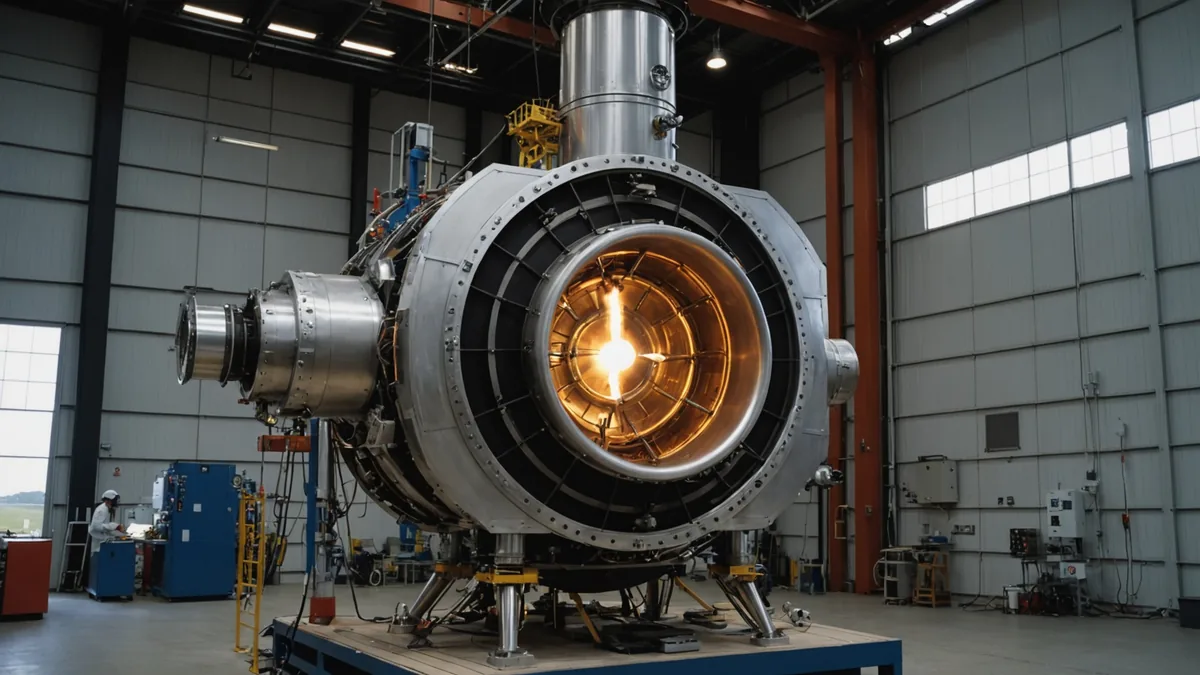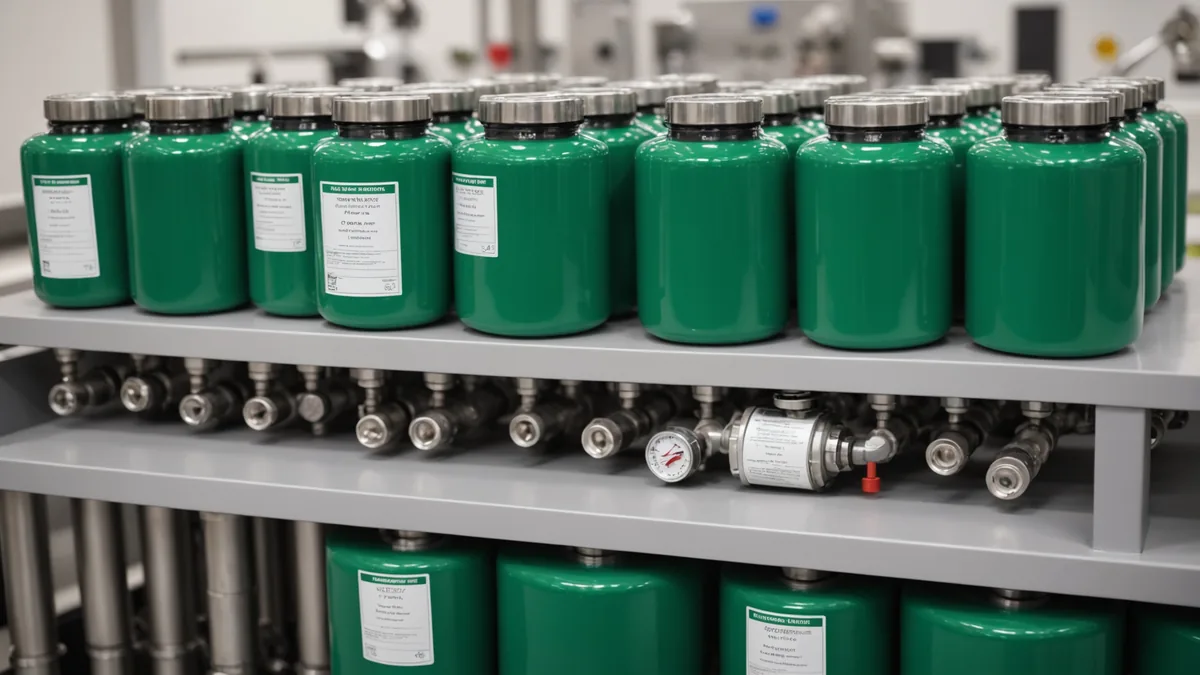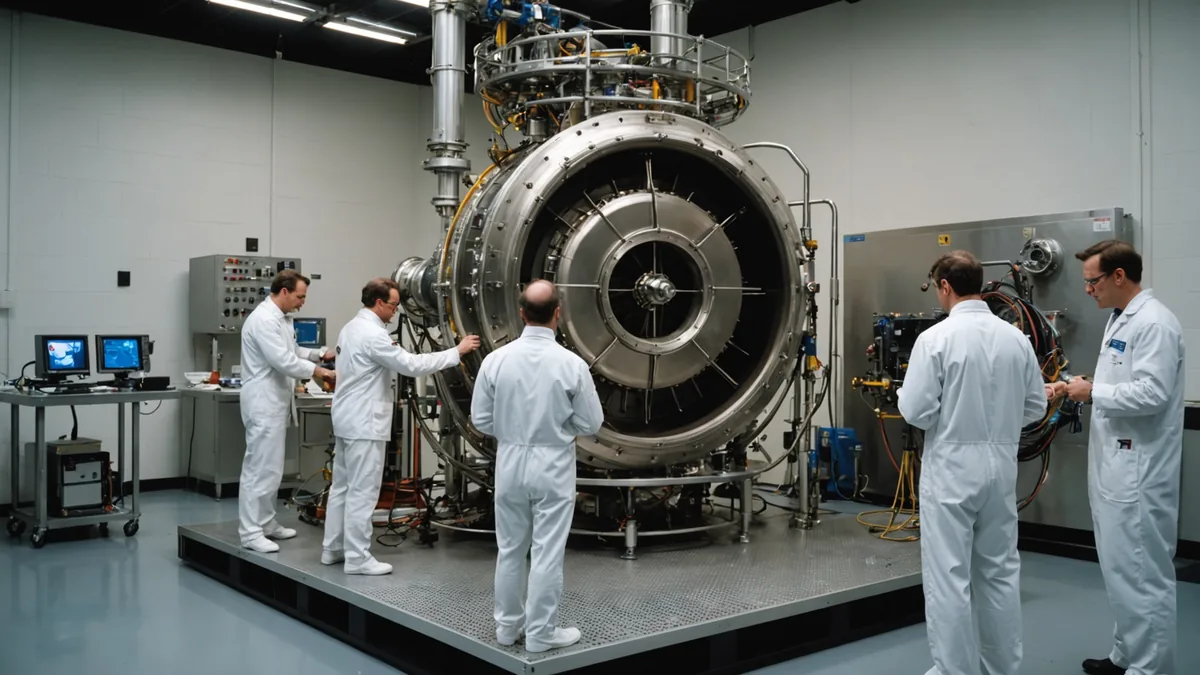
Qualification is not paperwork. Not even close. It is the engineering process that establishes whether your propulsion system will survive the dynamic environment of launch and perform at end-of-life in the thermal and radiation conditions of orbit. Getting the ECSS-E-ST-35-01C test campaign right the first time is far cheaper than discovering a design-verification gap at acceptance of unit 50.
What ECSS-E-ST-35-01C Actually Covers
ECSS-E-ST-35-01C is the European standard for liquid and electric propulsion testing. It defines the test categories, test levels, and documentation requirements for space propulsion qualification at component, subsystem, and system level. Not optional. ECSS-E-ST-35-01C is not optional for programmes targeting ESA missions or Arianespace rideshare slots; several commercial prime contractors have also adopted it as a baseline requirement in their smallsat supplier qualification audits.
The standard distinguishes three test categories: Development Testing (DT), Qualification Testing (QT), and Acceptance Testing (AT). Development testing is exploratory and occurs during design iterations. Qualification testing demonstrates margin — typically 1.5× expected flight load — on the Qualification Model (QM) or Proto-Flight Model (PFM). Acceptance testing verifies conformance of every flight unit to qualification-demonstrated performance.
Vibration Testing
Launch vibration loads for smallsat rideshare missions are driven by the launch vehicle and the dispenser. Typical qualification test levels for a smallsat propulsion system in the 0.1-5 kg mass range, riding on a Soyuz/Fregat, Vega, or similar: 14-20 g RMS sinusoidal sweep (5-100 Hz, 4 oct/min), and a random vibration spectrum of 0.04-0.08 g²/Hz at 20-2000 Hz.
Three axes minimum. ECSS-E-ST-35-01C requires a minimum of 3 axes with functional verification (cold-flow or pressure decay check) before and after vibration to detect valve seat damage or injector element shift. In our experience, propulsion units that pass vibration without a post-test functional check later show valve leakage anomalies attributed to particle contamination dislodged during vibration — particles that cold-flow testing would have caught immediately.
Shock Testing
Shock loading at separation events is the highest-frequency load a propulsion system will experience. Shock Response Spectrum (SRS) qualification levels for a 3U-12U spacecraft separation event typically run 2000-4000 g at frequencies above 1000 Hz. This is devastating to brittle components: pyrotechnic valves, ceramic catalyst bed pellets, and thin-wall pressure transducers are all shock-sensitive.
ECSS-E-ST-35-01C Table 3 provides SRS levels by satellite class. For micro- and nanosatellites, the SRS qualification levels are slightly reduced relative to larger platforms but still require a dedicated test campaign. Qualification by analysis alone is accepted only when geometric similarity to a shock-tested heritage design can be demonstrated with documented uncertainty bounds.
Thermal Vacuum Testing
The thermal vacuum campaign verifies propulsion system operation across the expected orbital thermal range, typically -30 °C to +70 °C for LEO platforms, with transition rates of 1-5 °C/min in vacuum. For green monopropellant thrusters, the critical checks are: catalyst bed ignition reliability at cold soak, valve seat performance after thermal cycling, and propellant tank structural integrity under combined pressure and temperature loads.
ECSS-E-ST-35-01C requires a minimum of 4 hot-fire start-ups at cold-soak temperatures during the thermal vacuum campaign for flight-type monopropellant thrusters in the 0.1-22 N class. This catches catalyst bed preheat system issues that ambient-temperature testing misses entirely. Seriously, ambient-only qualification is one of the most common gaps we see in smallsat propulsion programmes entering flight readiness review. Period. Run the thermal vacuum campaign.
Hot-Fire Test Programme Sizing
The qualification hot-fire programme must demonstrate: minimum and maximum thrust performance against the specification envelope, pulse mode performance (minimum pulse width ≥ 10 ms, pulse repeatability within ±5%), ignition delay at cold start (≤ 1.5 s for first fire), and accumulated-impulse life equivalent to 125% of the mission design life (including deorbit).
For a 1N green monopropellant thruster on a 5-year mission with 312 m/s delta-v budget (6U reference mission), the qualification hot-fire total impulse target is approximately 6,000-8,000 N·s, which at 225 s average Isp corresponds to roughly 2.7-3.6 kg of propellant consumed during qualification. This is a significant campaign, and it is the right size. Qualification margin has to be real.
Documentation and Compliance Matrix
ECSS-E-ST-35-01C requires a Propulsion Test Plan (PTP) submitted to the responsible engineer or quality assurance body before the campaign begins, a Propulsion Test Report (PTR) per test event, and a Compliance Matrix demonstrating closure of every standard requirement by test, analysis, or inspection.
The compliance matrix is where programmes most often accumulate technical debt. Non-conformance reports raised during qualification that are closed by waiver rather than by design fix carry risk into the flight programme. Every waiver on a qualification NCR is a judgement that the nonconformance does not matter: that judgement has to be backed by analysis, not by schedule pressure.
ISPTech's propulsion systems are qualified under ECSS-E-ST-35-01C to flight standard. Technical documentation and test evidence packages are available to qualified primes and spacecraft operators. Contact us via request a technical brief or visit our propulsion systems page for programme-level information.
The Cost of Getting Qualification Wrong
In our experience reviewing propulsion qualification programmes, the most expensive failures occur not during the qualification campaign itself but 18-24 months later, when manufacturing nonconformances at flight production reveal that the qualification campaign did not adequately characterise manufacturing variation. A qualification campaign that tests one unit at nominal dimensions does not bound the performance envelope of a production lot with ±0.05 mm tolerance variation on injector orifice diameters.
Good qualification practice builds the QM from production-representative hardware, not prototype hardware machined to tighter tolerances than production tooling can reliably achieve. The qualification model should represent the worst-case in the tolerance envelope, not the best. If you qualify the best and ship units closer to the tolerance boundary, the Isp data from qualification does not bound shipped performance. That gap is a compliance defect that will surface eventually.
Counterintuitive? Maybe. True? Absolutely. Finding this during qualification at EUR 200,000 total campaign cost is vastly preferable to finding it during spacecraft-level integration review at EUR 2 million of schedule impact. Qualification margin has to be real margin, not paper margin.