5,000 satellites per year. That is the demand figure that consistently appears in NewSpace market forecasts for the late 2020s when constellation deployment plans are aggregated. Whether that number is accurate to within 50% is debatable. That it represents a qualitatively different demand environment for propulsion suppliers is not.
Market Structure: Constellations Drive the Numbers
The in-space propulsion market for small satellites below 500 kg is fundamentally driven by constellation programmes. Fundamentally. Full stop. One-off science and technology demonstration missions create demand for perhaps 200-400 propulsion systems per year globally. Constellation operators create demand for hundreds of units per programme, per year, on sustained multi-year delivery schedules.
Publicly announced constellation programmes that include propulsion requirements: SpaceX Starlink (>5,000 satellites operational as of early 2025, with Block v2 platforms carrying Hall-effect thrusters), OneWeb (648 first-generation satellites, each with 16 chemical thrusters), Amazon Kuiper (3,200+ planned), Telesat Lightspeed (298 planned), and over 30 national and commercial mega-constellation programmes at various development stages. The aggregate propulsion attach rate for these programmes, assuming most active altitude management, is estimated at 2,800-4,500 propelled spacecraft per year at full build rate.
Propulsion Attach Rate: Not 100%
Not every smallsat needs or buys propulsion. The attach rate — the fraction of spacecraft that include an active propulsion system — varies by mission type. Technology demonstration and earth observation missions below 12U frequently fly unpropelled. Constellation platforms above 50 kg almost universally include propulsion for drag compensation and deorbit compliance.
Our data shows a segmentation by mass: below 6U (roughly <5 kg), attach rate is approximately 30-45%. Between 6U and 50 kg, 65-80%. Above 50 kg, 90-95% for missions above 400 km altitude. The regulatory trend toward mandatory propulsion for collision avoidance and deorbit is pushing attach rates upward across all mass segments.
Technology Mix by Market Segment
The technology split is not uniform across segments. Cold gas and warm gas systems dominate the sub-10 kg class. Chemical monopropellant (primarily green propellants at new programme starts) dominates the 10-100 kg class. Electric propulsion (Hall and ion) dominates large constellations above 100 kg where Isp efficiency matters more than thruster simplicity.
The fastest-growing segment in our view is the 10-50 kg class, driven by commercial remote sensing operators and national defence programmes replacing large satellites with responsive smallsat constellations. This is the class where chemical monopropellant offers the best balance of performance, simplicity, and regulatory compliance, and it is the class ISPTech is primarily targeting.
Unit Economics at Constellation Scale
Constellation operators do not buy propulsion like traditional prime contractors. They issue multi-year frame contracts with defined delivery rates and unit price schedules that decrease with cumulative volume. A rough market observation: a 1N monopropellant thruster system for a 6U platform (complete, qualified, tested) that costs EUR 40,000-60,000 at unit quantities of 10-20 per year is expected to cost EUR 15,000-25,000 at 300 units/year delivery rates.
This 60-65% cost-down expectation is real and it is the basis on which constellation operators build their satellite economics. A propulsion supplier that cannot demonstrate a credible path to these economics does not get into the preferred supplier list. Simple as that. Period. The supplier evaluation criteria are shifting from "does your thruster work" to "can you manufacture and deliver at our constellation rate and price point."
Regulatory Tailwind for Propulsion
The FCC's updated 5-year post-mission disposal rule for US-licensed operators and ESA's Space Debris Mitigation Requirements for European programmes are creating a regulatory mandate for propulsion that did not exist at the same force level five years ago. Programmes that previously flew propulsionless now need a deorbit strategy, and drag sails are not always compliant on short timescales at altitudes above 500 km.
This regulatory tailwind adds roughly 15-25% to the addressable market for propulsion relative to the baseline spacecraft count, as previously unpropelled missions are brought into compliance. We expect this effect to accelerate through 2027-2030 as deorbit compliance deadlines approach for missions launched in 2022-2024 under the transitional provisions of the new rules.
What This Means for Suppliers
The NewSpace propulsion market rewards suppliers that can operate as production partners, not just technology vendors. Long-term frame contracts, schedule reliability, and a credible quality management system under AS9100D or equivalent are table stakes. For the 10-50 kg class where ISPTech competes, the market is genuinely large enough for multiple European suppliers. That is not the case in large-satellite propulsion, which remains concentrated in two or three incumbent suppliers with decades of heritage.
For ISPTech's capability positioning in this market, see our company overview or propulsion systems page.
Barriers to Entry for New Suppliers
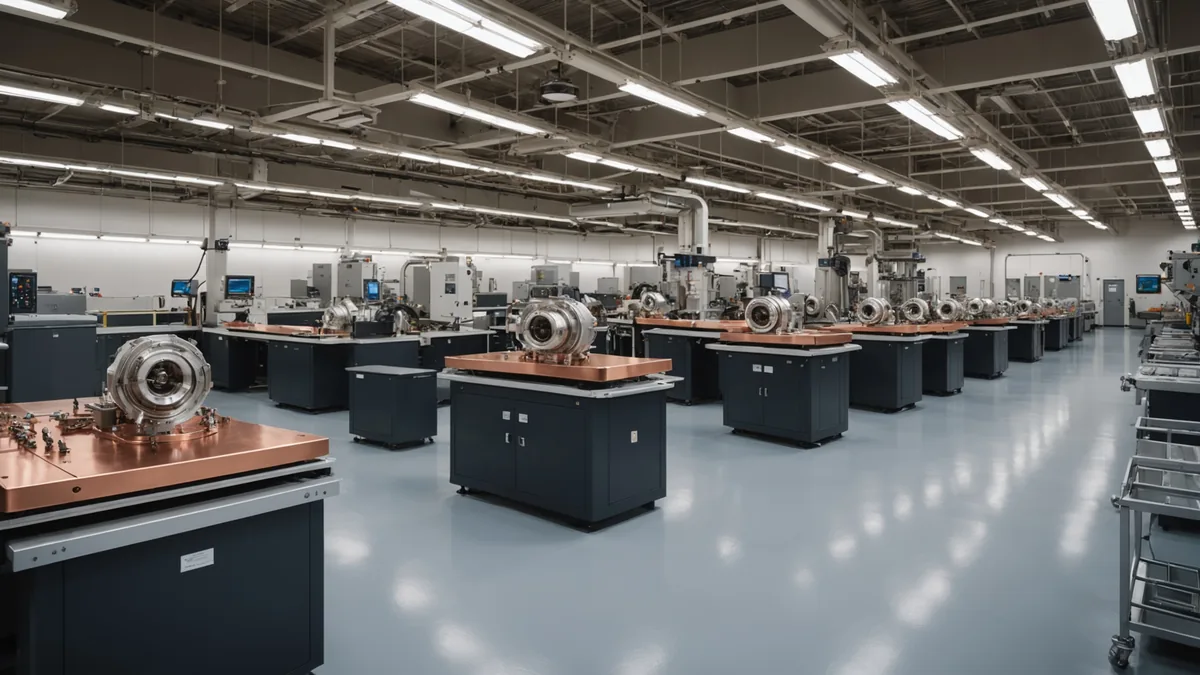
The barriers are real but finite. Three dominate: qualification programme cost (EUR 1-5 million for a full ECSS-E-ST-35-01C qualification on a 1N monopropellant thruster system), flight heritage requirements (constellation operators typically require 2+ years of on-orbit heritage before frame contract award), and production capacity credibility (operators need to see a staffed facility, not a PowerPoint, before committing to a delivery schedule).
None of these are insurmountable for a well-capitalised startup with a clear engineering roadmap. They are time-domain constraints: qualification takes 18-24 months from a standing start, flight heritage takes a technology demonstration mission, and production capacity is capital expenditure. The window for new entrants in the European smallsat propulsion market is open now precisely because the incumbents have not invested in the batch production architecture that constellation operators require. Five years. Roughly. In 5 years, one or two new suppliers will have established the qualification heritage and production capacity to hold that market. We intend to be one of them.