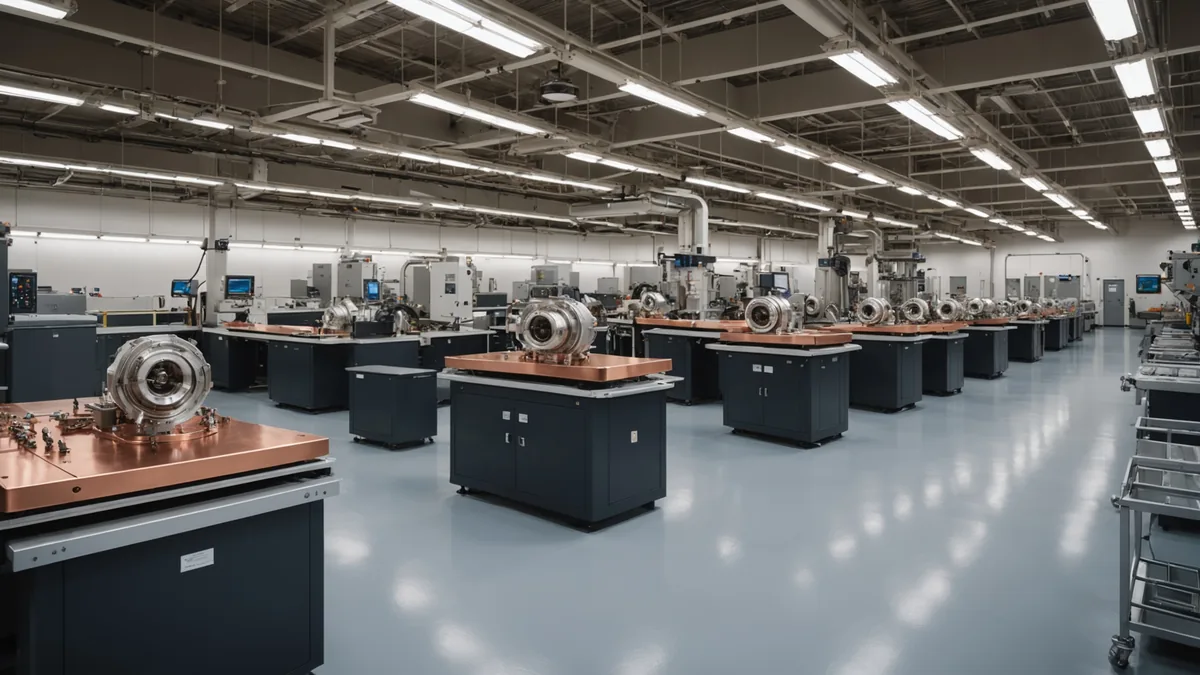
Constellation operators don't buy propulsion one thruster at a time. They buy 300 units, sometimes 600, on a fixed delivery schedule tied to launch campaigns that slip for no one. Our data shows that the gap between unit-production logic and batch-production reality is the single most common source of programme risk we see at the propulsion interface.
Why Unit Economics Break at Scale
A thruster qualified for a smallsat platform typically exits a development programme at a unit cost built around 30-50 units per year. Tooling amortisation, incoming inspection, hand-fitting of injector components, individual acceptance hot-fires at a dedicated test stand — all of that makes sense at low rate. It stops making sense when a constellation operator asks for 400 units over 18 months.
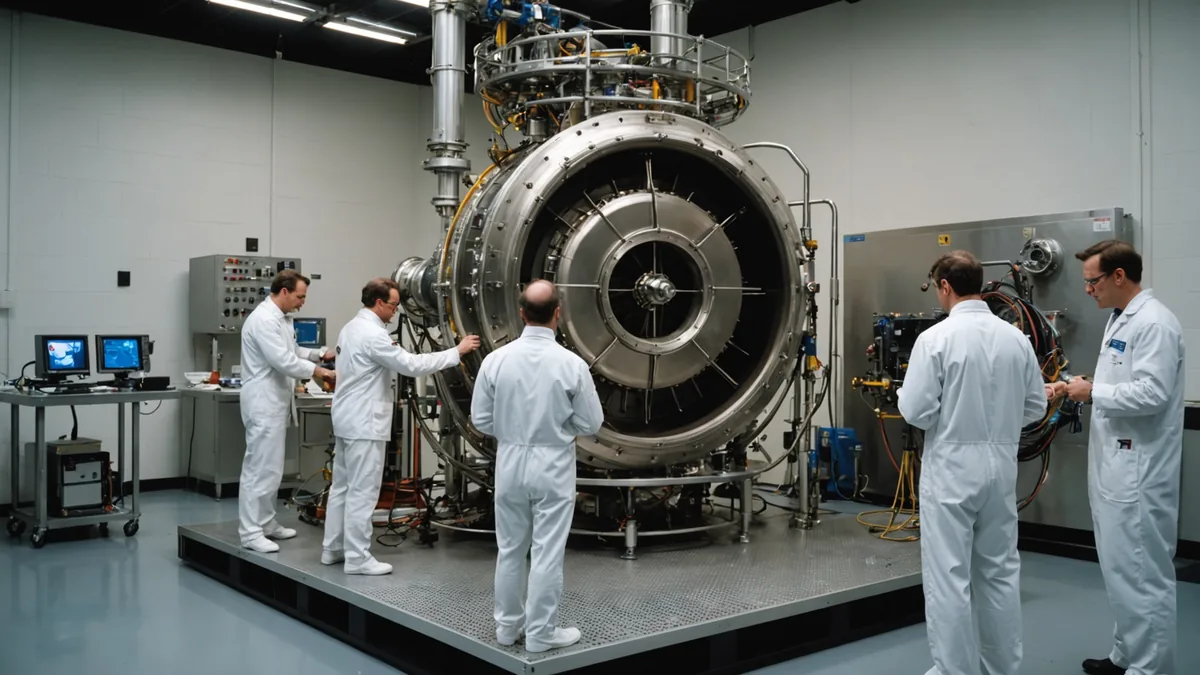
Consider the acceptance test burden alone. Hot-fire acceptance at 1N thruster level, single-shift, single-stand: roughly 4 test runs per unit including propellant load, pressurisation, firing, safing, and post-test inspection. At 400 units that is 1,600 stand occupancy slots. A single test stand running at 80% availability handles about 8 units per week. You are looking at 200 weeks. That arithmetic breaks every schedule on the market. Every single one.
Batch engineering starts from the opposite end: define the test architecture first, then design the thruster to fit it.
Learning Curve Economics
The Wright-Fenstemaker learning curve is well-established in aerospace manufacturing. A 90% learning curve means that every time cumulative production doubles, unit labour cost drops by 10%. At 50 units the savings are modest. At 400 units you are four doublings in from unit 25 — that is roughly 34% lower labour per unit if the workflow is genuinely repetitive.
In our experience, most smallsat propulsion suppliers do not capture this curve because they treat every batch as a new production run rather than a continuation of a single programme. Part numbering resets, process qualification restarts, operators rotate. The learning evaporates.
ISPTech's batch manufacturing approach locks the process document, freezes the bill of materials at Lot 1 unless a formal change order is raised, and tracks operator certification hours per work centre so the curve is real, not theoretical.
Propellant Handling at Volume
Green monopropellant batches introduce a constraint that hydrazine operators sometimes miss: water content in AF-M315E and LMP-103S variants is controlled to ±0.5% by mass, and bulk-loaded propellant batches must be sampled and certified before any thruster is filled. At 400 units with a propellant mass of 0.3-1.2 kg per tank, that is 120-480 kg of propellant per production lot. Sampling protocol under ECSS-Q-ST-70 adds 2-3 days of lab hold time per bulk delivery.
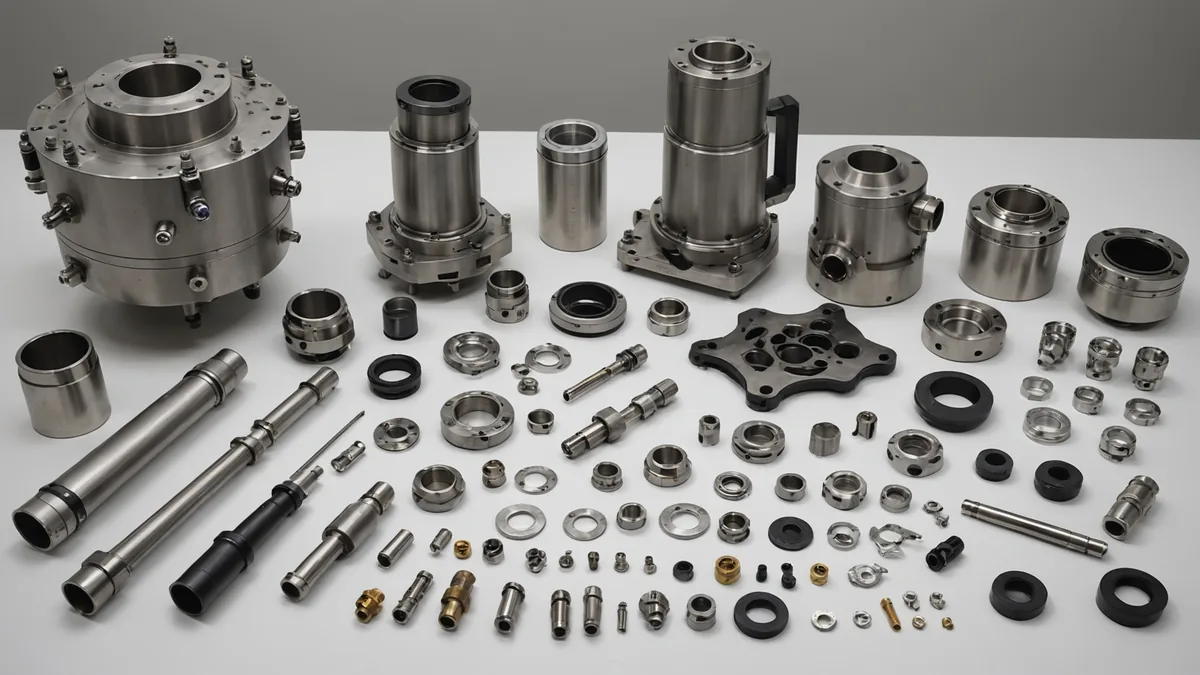
Design-for-manufacture here means integrating propellant fill and drain valve placement so that automated fill stations can service 8-12 thrusters in parallel rather than one at a time. We've seen programmes cut propellant-loading calendar time by 60% simply by standardising the fill port orientation and switching from manual torque verification to inline flow-based fill-complete detection.
Acceptance Testing Architecture
The only way to acceptance-test 400 units in 18 months without infinite test stands is to separate performance verification from component-level hot-fire. For green monopropellant thrusters in the 1-22N class:
- Flow characterisation (cold flow, pressure decay) can be done on a pneumatic bench at ambient conditions, verifying injector Cd to ±2%, valve seat leakage to <0.5 scc/min, and propellant filter ΔP. Throughput: 20-30 units per day per bench.
- Hot-fire sampling at 10% lot acceptance rate with ±3-sigma Isp and thrust performance envelope. A lot of 40 units requires 4 hot-fire acceptance tests, not 40. ECSS-E-ST-35-01C Table 5 lot acceptance provisions allow this when cold-flow data correlates against a validated performance model.
- Leak and proof pressure as 100% screen, automated test rig, 3 minutes per unit.
This architecture cuts hot-fire stand time by approximately 80% versus full acceptance, while maintaining statistical confidence in delivered performance. Real talk: no constellation operator will accept pure sampling without a validated model backing it. The model has to exist before Lot 1 ships.
Supply Chain Freeze and Change Control
Parts obsolescence is the invisible schedule killer in long-rate production. A thruster designed with a commercially-available MEMS pressure sensor that enters end-of-life at unit 150 is a programme stop. Batch engineering requires a supply chain audit at PDR, not at production readiness review.
We map every component against supplier product-life commitments beyond the programme end. Components with less than 5-year product life guarantees either get a drop-in-compatible alternative identified at design freeze, or they get an authorised lifetime buy placed at Lot 1 contract signature.
Integration Interface Standardisation
Constellation buses are themselves manufactured at volume, and their propulsion interface is fixed early. Every millimetre of bracket compliance, every Newton of plume impingement clearance, every millibar of feed pressure tolerance must be resolved at design freeze — not at integration test. We've seen a single mechanical interface nonconformance at the 350th unit trigger a 6-week hold while a waiver was written. Six weeks. At that stage of production that is not a schedule slip, it is a programme crisis.
For technical details on ISPTech's batch-rated propulsion systems and delivery timescales, see our propulsion systems overview or request a technical brief.