Propulsion is one of the last components in the smallsat value chain to undergo serious cost engineering. Structures are 3D-printed. Avionics are COTS-integrated. Solar panels come from qualified commercial suppliers. Yet most propulsion systems are still built using processes that would be recognisable to engineers from the 1980s. Here is a technical breakdown of where the cost actually lives, and which levers are real.
Where Propulsion Cost Comes From
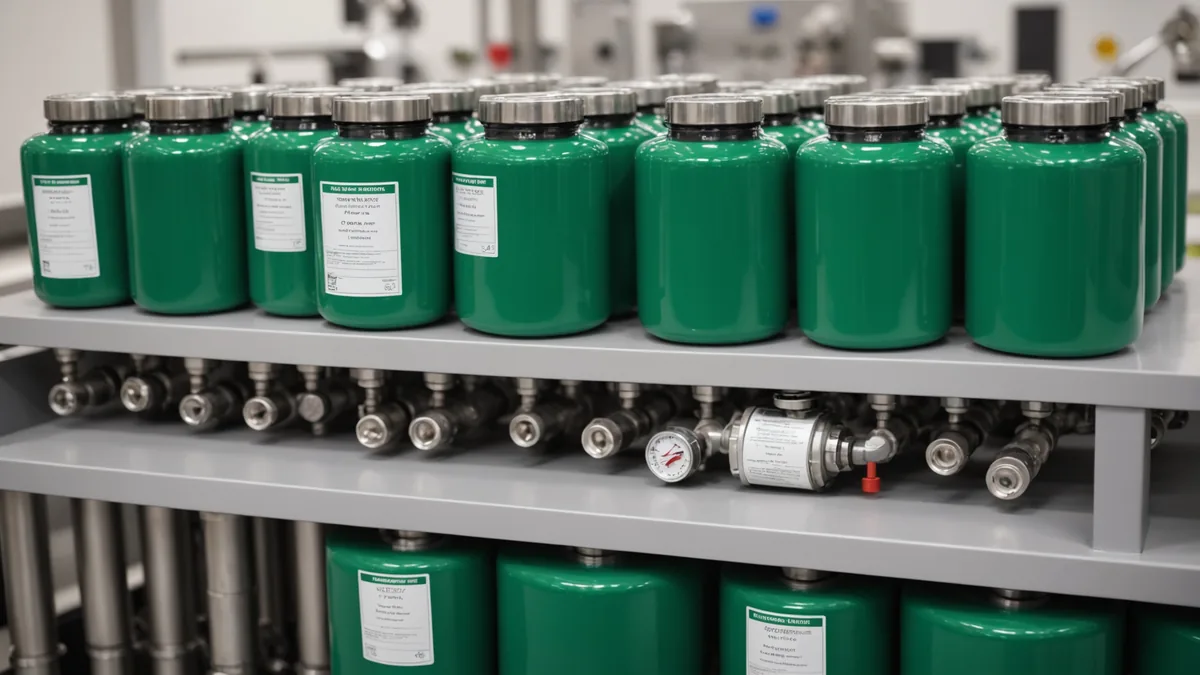
A 1N monopropellant thruster system for a 6U CubeSat — thruster, propellant tank, fill/drain valve, latch valve, pressure transducer, filter, tubing — has a direct bill of materials cost of roughly EUR 4,000-8,000 at quantities of 10-20 units per year. The unit price at those volumes is EUR 40,000-60,000. The 5-8× markup over BOM covers: NRE amortisation, qualification programme cost spread over production volume, test labour (acceptance hot-fire is expensive), quality system overhead, and supplier margin.
Of these cost elements, test labour and NRE amortisation are the two that respond most to volume. BOM cost responds to supply chain design. Quality overhead is relatively fixed. This decomposition tells you exactly where to focus cost-reduction engineering effort.
COTS Components: What Works and What Does Not
The COTS component strategy is the most misused cost-reduction lever in smallsat propulsion. Using commercial-off-the-shelf components is only cost-effective when the part is actually qualified for the space environment and when the supply chain is stable enough to support a production programme.
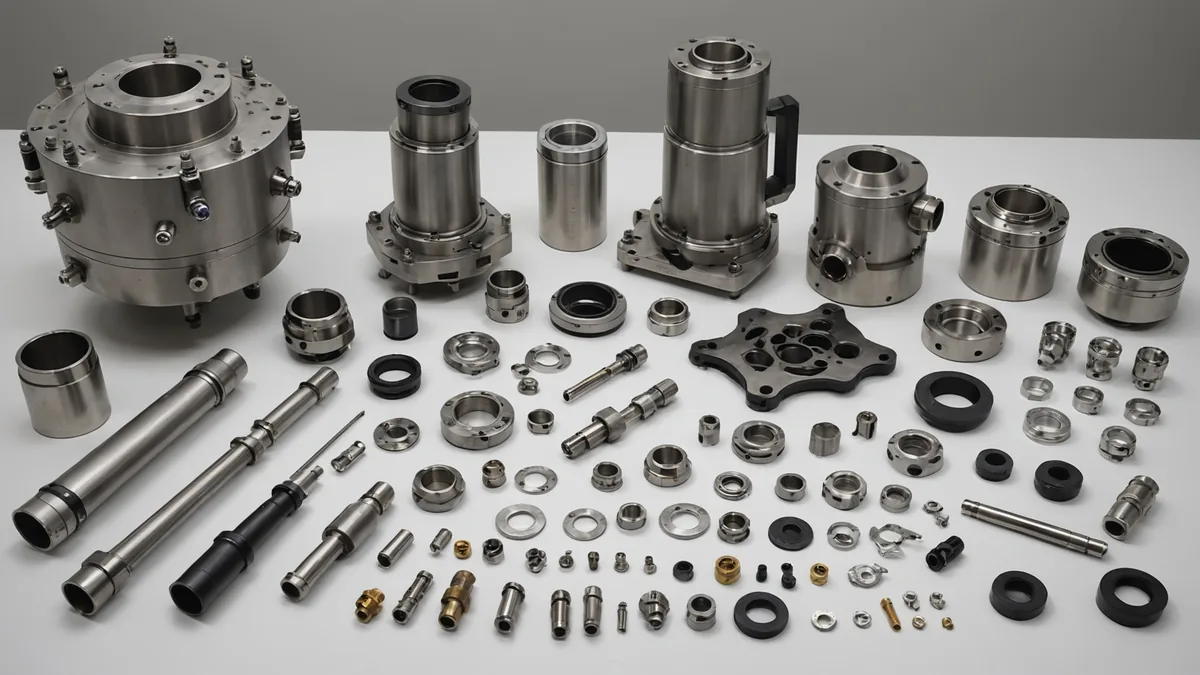
In our experience, the components where COTS substitution works well are: solenoid valves (ISO 4547 automotive-grade variants with space screening applied, saving 40-60% versus space-heritage valves), pressure transducers (MEMS variants screened to ECSS-Q-ST-60-13C Group 1 are commercially available at EUR 200-400 versus EUR 2,000-4,000 for legacy space parts), and structural fittings (titanium machined from ASTM-grade bar stock, ECSS traceability applied post-machining).
Components where COTS substitution fails: catalyst beds (no COTS equivalent to qualified iridium-on-alumina catalyst exists at small quantities — you will manufacture or buy from a qualified supplier), propellant tanks (pressure vessel qualification is not transferable from commercial certificates), and filter elements above 5 micron rating (COTS filter housings exist but the qualification documentation trail is typically insufficient for ECSS-E-ST-35-01C compliance). Know which is which before you design COTS substitution into your BOM.
Additive Manufacturing for Structural Components
Additive manufacturing (selective laser melting of Ti-6Al-4V or Inconel 718) is genuinely cost-reducing for thruster structural components when volume justifies the process qualification effort. For the thruster body, manifold block, and catalyst bed housing, AM reduces machining time by 60-80% relative to conventional subtractive machining from solid billet, and enables internal channel geometries impossible to machine conventionally.
The qualification barrier is real but finite. ECSS-Q-ST-70-78C covers space additive layer manufacturing qualification requirements. A first-time AM process qualification campaign under this standard typically requires 12-18 months and EUR 150,000-400,000 in NRE. For a production programme targeting 100+ units per year, this NRE is recovered in under 18 months of production savings.
Batch Testing Architecture
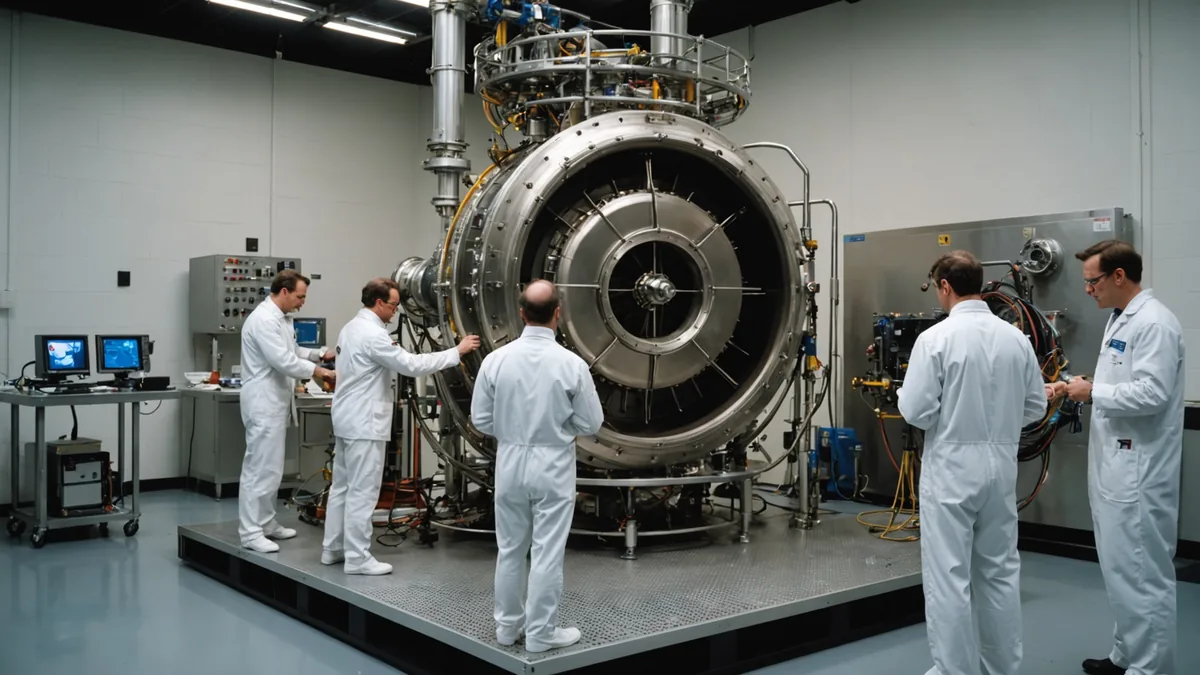
We covered this in more detail in our article on constellation batch manufacturing, but the principle applies to cost reduction broadly: acceptance hot-fire on a statistical lot basis (10% sampling with 100% cold-flow) versus individual unit hot-fire acceptance reduces test stand time by approximately 80% per unit. At 100 units per year, that is roughly 6-8 months of recovered test stand calendar time, which translates directly to lower programme cost and faster delivery cadence.
The prerequisite is a validated correlation model between cold-flow characteristics (injector Cd, valve Cv, filter ΔP) and hot-fire performance. This model has to be built during qualification and validated with a calibration dataset of 15-20 units spanning the expected manufacturing variation envelope. It is an upfront investment. But once validated, it transforms acceptance test economics.
Design-for-Manufacture: Integration Interface Standardisation
Every non-standard mechanical interface in a propulsion system costs money at integration. Spacecraft integrators charge for non-standard work. Bespoke bracket designs, non-catalogued fitting sizes, and asymmetric thruster orientations that require custom harness routing all add integration cost that appears in the spacecraft integrator's quote, not the propulsion system price. Total system cost is what matters.
ISPTech's thruster family is designed to a standard mechanical interface envelope with a fixed set of fill/drain port orientations and a standardised electrical connector (MIL-DTL-38999 Series III) that is directly compatible with the harnesses used in three of the five most common 6U-50 kg satellite bus platforms in the European market. That interface standardisation reduces spacecraft integration cost by approximately EUR 5,000-15,000 per unit. That is real system-level cost reduction, even though it appears as a spacecraft integration savings rather than a propulsion unit price reduction.
The Learning Curve Is Real, If You Capture It
The Wright-Fenstemaker 90% learning curve applies to propulsion manufacturing when the process is genuinely repeatable. At 400 cumulative units, unit labour cost is approximately 65% of unit 1 cost. Most propulsion suppliers do not capture this curve because they reset production processes between batches. Locking the BOM, freezing the process document, and tracking operator certification hours are the mechanisms. They are boring. They are also the only way to deliver the unit economics that constellation operators require.
For ISPTech's production cost roadmap and delivery capacity planning information, contact our engineering team via request a technical brief or visit our propulsion systems page.