Satellite OEM
ISPTech provides propulsion systems optimised for satellite bus integrators — from cubesat attitude control through GEO transfer apogee kick. Mass, volume, and operational lifetime are primary design drivers.
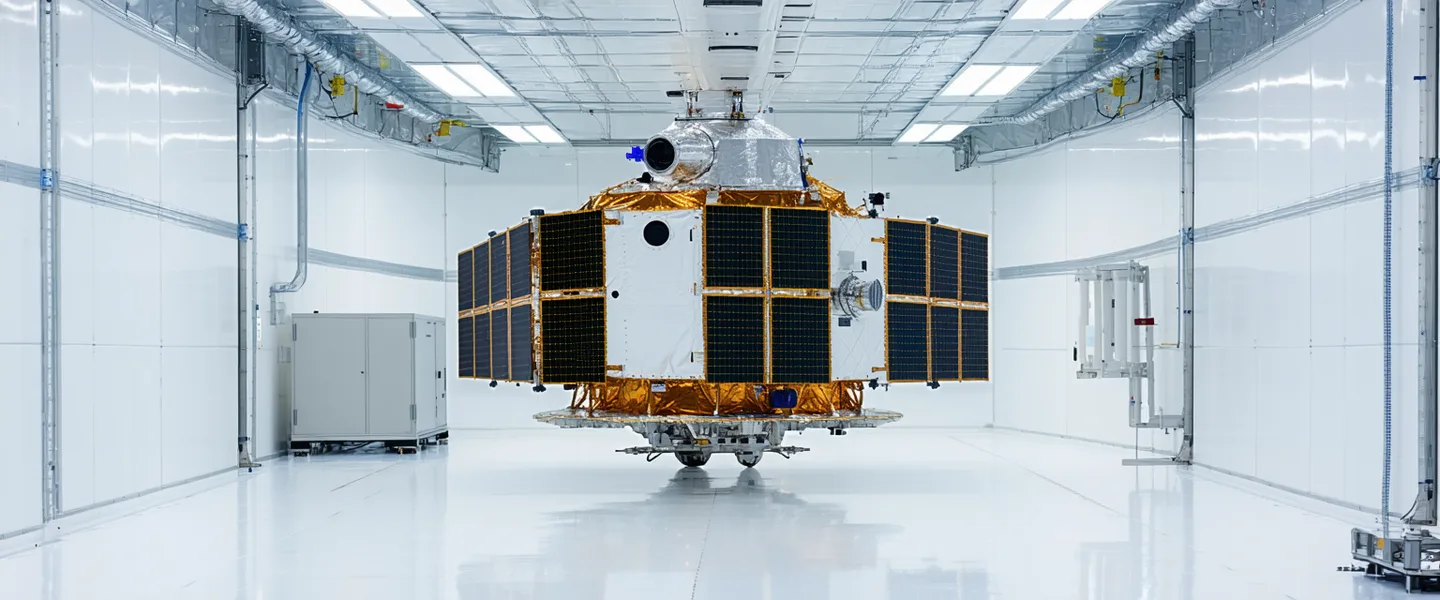
Satellite OEM Propulsion Requirements
OEM Integration Constraints
Satellite bus design is mass-budget driven. Propulsion system volume must fit standard panel bays. Propellant loading must be compatible with customer integration facility authorisations. Long operational lifetime (5–15 years) demands demonstrated reliability.
- Mass budget: propulsion system typically 10–25% of wet mass
- Volume envelope: fixed bay dimensions per platform spec
- Reliability target: > 0.98 per thruster for lifetime
- Propellant loading: facility authorisation constraints
Mass-Optimised, Documented Systems
ISPTech designs propulsion assemblies to customer interface control documents. Pre-qualified product families reduce non-recurring engineering costs. Full documentation trail for satellite-level qualification review.
- Pre-qualified product families — reduced NRE
- Configurable thruster configurations per mission profile
- Full ICD, qualification data package, and acceptance data
- Engineering support through PDR, CDR, and acceptance
Product Fit by Mission Type
| Mission Type | Orbit / Altitude | Recommended System | Key Parameter |
|---|---|---|---|
| 6U–16U CubeSat ADCS | LEO 400–600 km | CG-50 Cold Gas RCS | Mass: 0.085 kg, Isp 68 s |
| Smallsat AOCS (<100 kg) | LEO 400–800 km | CHT-5 Monopropellant | 0.5–5 N, Isp 220 s |
| LEO / MEO Station-Keeping | LEO / MEO | HET-200 Hall Thruster | Isp 1,400–1,800 s |
| GEO Station-Keeping | GEO 35,786 km | CHT-20B Bipropellant + PMU | Isp 305 s, 20 N |
| GTO → GEO Transfer | GTO transfer | CHT-100 / CHT-500 Bipropellant | 100–500 N, Isp 310 s |
| Propellant Feed System | All orbits | PMU-1 / PMU-5 / PMU-50 | 0.5–50 kg capacity |
Discuss Your Satellite Programme
ISPTech engineers can review your mission requirements and provide a propulsion system recommendation with preliminary mass, volume, and performance estimates.