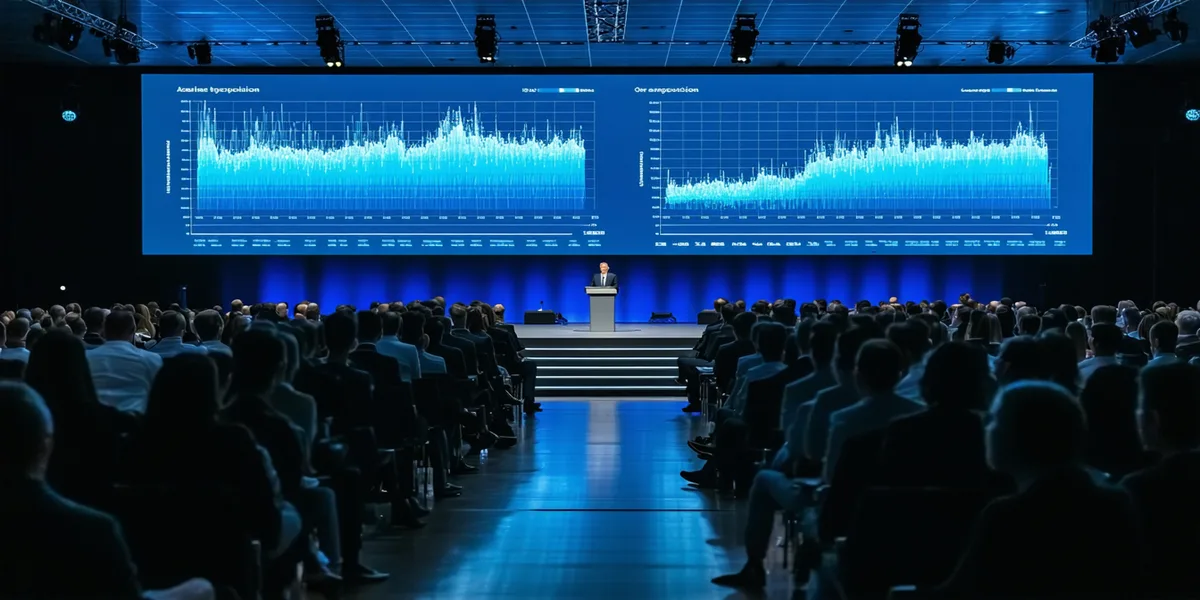
In July 2024, ISPTech's engineering team travelled to Brussels to present qualification test results for the CG-50 cold gas reaction control system at the 11th European Conference for AeroSpace Sciences (EUCASS). The paper, delivered in the propulsion and energetics track, documented the full functional and environmental qualification campaign conducted at ISPTech's Lampoldshausen facilities during the first half of 2024.
About the CG-50 Cold Gas RCS
The CG-50 is ISPTech's primary cold gas thruster for attitude control and orbit maintenance applications where propellant simplicity and low contamination risk outweigh the performance advantages of catalytic or bipropellant alternatives. Operating on gaseous nitrogen (GN₂) or compressed argon, the thruster produces a nominal 50 mN thrust at a specific impulse of approximately 65–70 s — figures consistent with cold gas RCS performance expectations across the industry. Dry mass is under 38 g, and the design accommodates continuous on/off duty cycles from 10 ms pulse widths upward.
The target application is CubeSat and small-satellite attitude control, where ECSS-E-ST-35 compliance, low outgassing, and compatibility with commercial propellant tanks drive procurement decisions more than raw Isp. For a 12U CubeSat carrying an optical payload, pointing stability during imaging windows depends on the RCS being able to deliver repeatable 10–50 mN impulse bits without propellant contamination of the primary aperture — the design envelope the CG-50 was built around.
Qualification Campaign Structure
The qualification programme followed a standard proto-qualification sequence, with the test article subjected to the following campaign phases at Lampoldshausen:
- Functional testing: thrust measurement at nominal and off-nominal inlet pressures (2–8 bar), pulse characterisation, leak-rate measurement to <1×10⁻⁴ mbar·l/s He
- Vibration qualification: random vibration per ECSS-E-ST-10-03, levels consistent with small launch vehicle (Vega-C / ESPA) payload environments — 14.1 grms for 60 s per axis
- Thermal cycling: 100 cycles between −40 °C and +80 °C, post-cycle leak and functional checks
- Life test: 250,000 actuation cycles at nominal operating point, mid-life and end-of-life performance characterisation
- Electromagnetic compatibility (EMC): valve solenoid susceptibility sweep to verify no unintended actuation below the commanded threshold
All test phases were completed with the same hardware serial, with post-campaign disassembly inspection confirming valve seat integrity and no measurable erosion of the nozzle throat after 250 k cycles.
Key Results Presented
The EUCASS paper focused on three technical areas: thrust repeatability statistics across the life test, the relationship between inlet pressure variation and impulse bit scatter, and thermal soak behaviour during the cycling programme.
Thrust repeatability across the 250 k cycle life test showed a ±2.3% 3σ band around the mean value — within the ±3% acceptance criterion applied in the qualification plan. Impulse bit scatter at the 10 ms pulse width was the more demanding metric, as this represents the minimum commanded manoeuvre for attitude control. Results showed the 10 ms impulse bit varied by ±4.8% across the full inlet pressure range of 2–8 bar, with the primary driver being solenoid response-time variation at low temperatures rather than fluid dynamics.
The thermal cycling data identified a reversible stiffness change in the valve spring assembly below −25 °C that contributed roughly 1.2 ms of additional latency to valve opening time. ISPTech's engineering team noted that for missions operating in cold-case eclipse thermal environments — where propellant lines may see temperatures below −30 °C — this latency offset should be factored into RCS command timing tables. The paper proposed a straightforward correction: a temperature-indexed timing bias applied in the OBDH command sequence, already validated in the final 20,000 cycles of the life test.
What the Qualification Does Not Cover
It is worth being explicit about scope. The qualification campaign executed at Lampoldshausen covers proto-qualification of the CG-50 at the Qualification Model (QM) level for the specific inlet pressure range and temperature limits tested. It does not constitute flight acceptance of any particular flight unit, nor does it address propellant compatibility beyond GN₂ and argon. Customers intending to use the CG-50 with alternative cold gas propellants — including carbon dioxide or butane — will require additional propellant compatibility and performance validation at the mission level. Similarly, the qualification does not cover operation outside the tested inlet pressure envelope or in conjunction with active heater strategies that raise propellant temperature above the tested +80 °C upper limit.
EUCASS and the Propulsion Engineering Community
EUCASS is the primary European forum for propulsion engineering peer exchange — different in character from IAC, which tends toward programmatic and programmatic-commercial presentations. Papers presented at EUCASS are reviewed by the organising technical committees and represent engineering-grade technical disclosure. For ISPTech, presenting at EUCASS is a deliberate choice: the audience includes propulsion engineers from DLR, ONERA, Safran, OHB, and smaller European space actors — exactly the community that evaluates propulsion components on technical merit before procurement dialogue begins.
The Brussels edition drew approximately 800 registered participants across aerospace propulsion, flight mechanics, and aerodynamics tracks. ISPTech presented in the afternoon session of the electric and chemical propulsion track on 15 July 2024.
Next Steps
The CG-50 qualification data is now available to prospective customers through ISPTech's standard datasheet request process, including the full qualification test report (QTR) summary. The flight-model production process draws directly from the QM hardware build sequence, with first article inspection and acceptance test criteria derived from the qualification campaign baseline.
ISPTech is currently engaged in applications engineering discussions with several small-satellite developers in Europe regarding CG-50 integration into CubeSat bus designs targeting 2025–2026 launch windows. Enquiries can be submitted via the datasheet request form; a dedicated applications engineer is available to review mission requirements and advise on propellant management compatibility.
The full EUCASS 2024 paper is available for download via the ISPTech Publications section, subject to registration.